Dear clients and friends,
Jay Hinkel
If we could rewind to Friday, February 27, 2026, and we had inside knowledge that the U.S. was about to begin a war with Iran, what would be the right investment position? I asked this question to ChatGPT, and here is its answer:
"If you knew the U.S. was about to start a war with Iran, the best trade would be long oil, defense stocks, and gold, and short airlines and travel. Middle East conflicts often spike oil prices (Hormuz risk), boost military spending, and trigger safe-haven buying."
I thought it would have said "dollars." Dollars have been the primary safe-haven position for times like these. As I write this, the dollar has gained about 3% during this period. For many of my clients, we've had a strong position in energy stocks for a number of years — that has been profitable so far this year.
10 Fundamental Factors Driving Gold
Here are the 10 fundamental factors that I believe have driven the price of gold since the year 2000. Consider how many are impacted by this war:
- Shrinking supply of new gold
- Growing demand from central banks
- Growing demand from consumers in developing countries
- Global fiscal and monetary policies
- Reckless U.S. government spending
- Outstanding derivatives yet to be valued
- Geopolitical risks
- Minimal U.S. investor ownership
- Small trading volumes for gold and silver
- Growing recognition of manipulation of paper contracts
#7 — Geopolitical risks. "War" is the worst risk. So, the fact that we have a war is generally viewed as fuel for higher gold prices. Then why hasn't the gold price increased? Hold that thought.
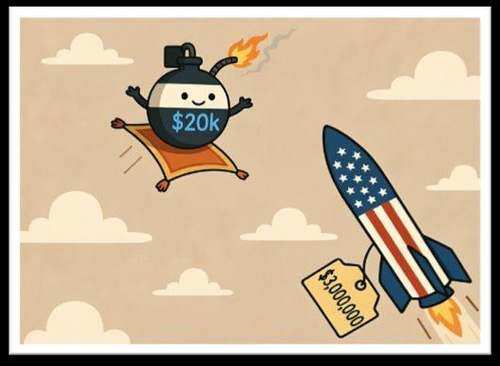
#5 — Reckless U.S. government spending. Some reports estimate our war costs at $1 billion per day. Part of the problem is Iranian drones costing $20,000–$50,000 are being shot down with $3–$5 million interceptor missiles. Prior to this war, military spending for this year was planned at $1 trillion. ChatGPT gives a range of $100B to $500B for the increase in war spending and rearmament. As I write this, our national debt is $38.9 trillion. Wars ALWAYS require more spending. Since the Revolutionary War, wars have always created money printing.
#4 — Global fiscal and monetary policies. The monetary policy of the U.S. is to print more money. Our political class knows they cannot stay in office by raising taxes to pay for a war. So they give us a stealth tax — a tax not seen on our radar screen. By printing money, the currency loses purchasing power and we pay a tax called "inflation." The classical definition of inflation is: "an increase in the money supply, which leads to higher prices." Inflation is not a mystery. It is a government plan.
#10 — Growing recognition of manipulation of paper contracts. Andy Schectman, owner of Miles Franklin, says the withdrawal activity at the COMEX is the equivalent of four feet of snow in Death Valley. With more than 30 years of precious metals experience, he says he has never seen this volume of bullion leaving the COMEX vaults. He concludes that "big money" is taking physical delivery of bullion to be held outside the system.
Why Have Precious Metals Declined?
First, let's acknowledge we are at the highest level for both gold and silver for any March in history. Gold has what looks like a solid bottom at $5,000. The weakness in prices has been created in the futures (paper) market — not the underlying story. The physical market is strong.
I do not think these first two weeks are an indicator of future momentum. I think we are still on track. Perhaps we've seen the low for this year. Maybe not. That is why this is called "investment risk."
Introducing Jay Hinkel
I have a new associate helping me — Jay Hinkel. Together we plan to call clients when we see momentum changing. We want to discuss allocation changes. We are not suggesting leaving precious metals investments entirely.
I first met Jay in 2013 when he was a senior at Grace College. He graduated and had a variety of experiences that have prepared him for his new career. We are both excited about our teamwork. I am not retiring. I have no intention of stopping what I'm doing. This is a very good move for my business.
The new war leads me to think this theme of precious metals investments and hard assets may take us through this decade. The peak may not happen until after 2030. This is a bull market that is not yet done — that's what I think. We will continue to watch this together.
— Brad Skiles, Psalm 20:7
Important Disclosure: The information provided here is for general information only and should not be considered an individualized recommendation or personalized investment advice. Any investment strategies mentioned here may not be suitable for everyone. All investing involves risk including loss of principal. No strategy assures success or protects against loss. The fast price swings in commodities will result in significant volatility in an investor's holdings. Precious metal investing involves greater fluctuation and potential for losses. Bradley K. Skiles, CLU, ChFC, CFP, CLTC is an LPL Registered Representative and Investment Representative. Securities and Advisory Services are offered through LPL Financial, a Registered Investment Advisor. Member FINRA/SIPC. Center Street Partners is independently owned and operated.